Friday, 3 April 2015

Remember kids, cars can't fly! Or can they? Scott Gentry reviews "Fast & Furious 7", an amusing, if slightly banal shot of puerile adrenaline.

"Fast & Furious 7"
Directed by: James Wan.
Starring: Vin Diesel, Paul Walker, Michelle Rodriguez, Dwayne Johnson, Tyrese Gibson, Kurt Russell and Jason Statham.
Rated: '12A' for containing moderate violence and moderate bad language.
Running time: 137 minutes.
Released in UK cinemas from the 3rd of April, 2015.

15 years ago, production began on conceivably, one of Universal's most lucrative franchises in the history of their company: "Fast & Furious". Reportedly based upon an article featured in “Vibe” magazine,  the films began small, featuring heavily upon the underground racing scene of L.A., then built its way up into one of the most ludicrously entertaining and unbelievably profitable set of heist films in cinema history. “Fast Five” itself benefitted from two things: the introduction of an insanely pumped out Dwayne Johnson, and a new wave of completely over-the-top thrills, like nothing we’d seen before. Heck, our band of rag-tag heroes even ripped a vault free from the inside of a police station using their cars, and dragged it through the streets of Rio de Janeiro. And if you thought that was absurd, “Fast & Furious 7” takes its action sequences to a whole new level.

Having defeated the fearsome Owen Shaw (Luke Evans) during “F&F 6”, this latest instalment finds our rambunctious crew settling into suburban life, having been fully pardoned by the United States and now living in the sanctity of their original home. But whilst attempting to put aside their criminal lifestyle and set their sights on family, trouble occurs in paradise. Dom (Diesel) and Letty (Rodriguez) are struggling to continue their tumultuous relationship, and Brian (Walker) himself admittedly misses the thrill of whizzing bullets and death-defying stunts, despite the calling of parenthood. But it isn’t long before the team are forced to once again, team up with DSS agent Hobbs (Johnson) and a shadowy government spook, named Frank Petty (Russell), in order to track down a minacious black ops assassin, (brother of Owen Shaw) Deckard Shaw (Statham), who is hell-bent on revenge...
 
 
The final minutes of “F&F 7” are admittedly, elegiac. Yes I, the least likely of “F&F” fans felt a sense of bereavement in its closing minutes. But let’s not get ahead of ourselves here. A fitting tribute to Paul Walker doesn’t disguise the fact that “F&F 7” is yet another needless, frenetic and dreadfully written piece of popcorn fare. Fellow critic Mark Kermode once said that these sequels only exist, because of the money generated from audiences who pay to see them. And of course, he is most certainly correct. But why do we subject ourselves to overlong bouts of nauseating torture every two years?
Well, perhaps it's due to the fact that “Fast Five” itself proved to audiences that “F&F” wasn’t only about the cars, but humour, inventive action sequences and above all, the ability to continue to astonish audiences well into their fifth instalment, something which many other franchises fail to do. But now, it seems as if each film since, features the exact same plot: criminal with connections to Dom’s family appears, government seeks aid in arresting said criminal and turns to America’s least trustworthy family for help, who oblige, due to the fact that one of their own has been hurt. Why can’t the government sort it out themselves? And for a family so rooted in religion, revenge seems to be a constant feature in their lives. Whatever happened to the idea of turning the other cheek? But perhaps what holds the film’s characters together is the concept of family, one that has been a major factor all throughout the seven feature films and ultimately, something which delivers a sense of humanity amongst the film’s high-jinks; something which is well-needed when comic relief fails.


Along with the film’s regurgitated plot, “F&F 7’s” script, once again written by franchise scribe Chris Morgan (“47 Ronin”), features clunky dialogue, which is clichéd and completely over-the-top. The comic relief once found in Gibson’s character Roman has become cringe-worthy, with the film’s superior and frankly bad-ass one liner’s left to franchise-saver, The Rock. The action sequences themselves are generally, poorly conceived and seem awfully similar to previous instalments. Even the scene in which Diesel and his co-stars skydive (whilst in cars) seems preposterous and highly aggravating, developing no sense of danger whatsoever. Even when certain characters are shot, beaten and placed in ‘that should have killed you’ crashes, nobody comes away with the slightest scratch. Courageous moves such as actually killing off multiple characters would surely add a devastating effect to the proceedings, only increasing the need for revenge and sequels, surely?
The cast itself is talented, but with material as clichéd as this to work with, it’s obvious that they won’t reach their full potential. However, Rodriguez receives perhaps the largest amount of screen-time since her introduction to the series, developing an intimate relationship with Dom that seems sincere and completely fleshed out. But Walker, Statham and Brewster are the actors with the least amount of material to work with, all three resigned to supporting characters with little development. Statham himself is supposed to resemble the film’s antagonist, yet arrives on screen perhaps three times in the film for terrible scenes, especially the eventual stand-off with Diesel. Perhaps the worst offence here is the underuse of “Game Of Thrones’s” Nathalie Emmanuel, as Ramsey. After superb work as Missandei, it’s disappointing to see such a talented actress receive little or no attention, with a character as flimsy as the car’s suspensions.

 
However clichéd the material becomes, James Wan’s welcome direction (he took over from long-time director Justin Lin) is put to terrific use in the frankly bombastic action sequences, particularly a scene in which a car flies through three tall buildings in Abu Dhabi. Ridiculous, but at the same time, the eleven-year-old in me wanted to cheer.

Verdict
In its seventh, tiresome and mind-numbing instalment, there are very few surprises here for fans of the series and newcomers, despite the delicate (if overstuffed) handling of Paul Walker’s departure. Clocking in at 137 minutes, “F&F 7” is tiring, clichéd and honestly, not an example of ‘leave your brain at the door’ entertainment at all.
4.5 Stars out of 10
Written by Scott Gentry.
 
 
Film/TV Rating Key
1-2 stars out of ten = Awful.
3-4 stars out of ten = Average.
5-6 stars out of ten = Good.
7-8 stars out of ten = Excellent.
9-10 stars out of ten = Amazing.
 
 
Trailer


Clip
 

Thursday, 26 March 2015

Etan Cohen's disastrous and offensive "Get Hard" is the epitome of a one-joke movie, despite a talented cast. - Written by Scott Gentry

"Get Hard" (15)
Directed by: Etan Cohen.
Starring: Will Ferrell, Kevin Hart, Craig T. Nelson and Alison Brie.
Rated: '15' for containing strong language and sex references.
Running time: 100 minutes.
Released in UK cinemas from the 27th of March, 2015.

Offensive on many levels, Will Ferrell's latest star vehicle plays out exactly the way it was described by one enraged critic at its SXSW premiere, stating that it seemed “racist as f–.” That's understandable. The ingenious pairing of Ferrell and Hart is the film's only redeeming feature, but when working from material written by Jay Martel, Ian Roberts and Etan Cohen (also director here, and writer of "Men in Black 3"), the two leads are forced to confront purely vulgar and completely humourless material, including an arguably homophobic sequence in which Ferrell's character is repulsed, when in preparation for prison life, is required to perform oral sex on a man whom he meets in a local gay bar; eventually not being able to bring himself to complete such an act. Or what about the completely needless introduction to everybody's favourite white supremacist group, the Alliance of Whites? Needless to say, you may be slightly offended.

Ferrell himself stars as James King, a successful stock broker who, upon the eve of his engagement party to the illustrious Alissa Barrow (perhaps the highlight of "Mad Men", Alison Brie), is wrongly arrested and convicted for tax evasion. Despite protesting his innocence, James is ordered to serve a 10 year sentence within the infamous San Quentin prison. With 30 days to get his affairs in order, James desperately seeks the help of a former acquaintance, Darnell (Kevin Hart), in a bid to become accustomed to prison life, as he presumes that Darnell has visited prison, purely based on the colour of his skin... Sigh.


"Get Hard's" often coarse and generally uninspired screenplay riffs upon the clichés of prison life (sexual assault, gang violence) in a manner which can only be described as insulting; not only to the audience's very intelligence, but due to the fact that the film itself is hilariously generic and outrageously offensive, especially since it classes itself as a piece of comedic cinema, for which it is a sorry excuse. Clearly, the filmmakers aren't attempting to offend, but when not handled properly, the content itself spirals out of control into a series of unnecessary sequences which can only pass for a multitude of sketches, poorly attempting to be substituted for a narrative structure. It just doesn't work. Perhaps the film's only redeeming gags appear when Darnell attempts to create a fake prison riot within James's mansion (in which a live monkey is thrown into the proceedings), and a " Boyz N the Hood" reference crops up, providing an enjoyable running joke throughout.


Verdict

"Get Hard" features a capable cast and a premise with potential, yet is spoiled in the creation of repulsive humour and needless stereotypes which aren't challenged, yet endorsed by the subject matter. When crafted well ("Team America: World Police", "Dogma"), offensive comedies can be hilarious, but "Get Hard" focuses on tired material, clearly not able to offer a fresh outlook on prison life.

2 Stars out of 10
Written by Scott Gentry.
 
 
Film/TV Rating Key
1-2 stars out of ten = Awful.
3-4 stars out of ten = Average.
5-6 stars out of ten = Good.
7-8 stars out of ten = Excellent.
9-10 stars out of ten = Amazing.


Trailer


Clip


Thursday, 19 March 2015

Competition: Win some rather snazzy "Insurgent" merchandise with our friends, E-One Entertainment!

The latest instalment of "The Divergent Series", titled "Insurgent", is now playing in UK cinemas nationwide, and we've got two awesome "Insurgent" activity tracker packs up for grabs in our latest competition, just for you, our lucky readers and followers!


"Insurgent" Activity Trackers Spec:

- Water resistant

 - TPU Bluetooth Activity band/watch worn around the wrist with OLED display, allowing users to monitor activity levels and overall lifestyle.

 - Includes time feature, tracking/monitoring goals for steps, activity, speed, sleep patterns.


Want to get your hands on a pack for yourself? Well, all you have to do is answer the following question to be in with a chance:

"Miles Teller stars as Peter Hayes, an ill-tempered Candorian, who was originally Tris Prior's mortal enemy throughout "Divergent". But in which film did Teller portray an equally arrogant character, often found with a pair of drum sticks in one hand, and the other in a bucket of ice?"

A) "The Spectacular Now"

B) "Project X"

C) "Whiplash"

To enter our competition, simply send (via email) your:
- Answer to the question
- Name
- Address
- Phone number
- and E-Mail

all to the email address, scottgentry830@gmail.com, before the 31st of March, 2015.


After being exposed as Divergents—people who don’t fit neatly into one of the five societal classifications or “factions”—Tris (Shailene Woodley) and Four (Theo James) find themselves on the run from Jeanine (Kate Winslet), the power-hungry leader of the Erudite faction.


Terms and Conditions
• Competition will close on the 31st of March , 2015.
Open to UK residents only. 
• Prize for the two main winners are "Insurgent" Activity Trackers.
• The winners will be drawn at random from all the correct entries, and only they will be contacted personally. Prize must be taken as stated and cannot be deferred. There will be no cash alternatives.


Trailer


Thursday, 12 March 2015

Tonally perplexing and sickening in its approach to comical violence, “The Voices” is a mentally disturbed piece of filmmaking, coincidentally featuring Ryan Reynolds’ finest performance since “Buried” - Written by Scott Gentry.


“The Voices” (15)
Directed by: Marjane Satrapi.
Starring: Ryan Reynolds, Gemma Arterton, Anna Kendrick and Jacki Weaver.
Rated: ‘15’ for containing strong language, sex references, bloody violence and gore.
Running time: 103 minutes.
Released in UK cinemas from the 20th of March, 2015.

It’s been over a year since Marjane Satrapi’s (“Persepolis”) fourth directorial feature premiered at the Sundance Film Festival, and based upon the early and overly positive critical buzz that the film received, I waited patiently here in the UK to see Ryan Reynolds redeem himself in a lead role, post “Green Lantern”, “R.I.P.D.” and the intolerable “Turbo”. You may be surprised to hear me say this, but Reynolds is a force to be reckoned with. In roles such as Paul Conroy in the unsettlingly claustrophobic “Buried” and the underappreciated part of Gary in head-spinning drama “The Nines”, he displayed great skill in controlling the screen, delivering subtly nuanced performances which proved he wasn’t just another Hollywood hunk, but perhaps something more. Yet again, it seems that Reynolds is the stand out performer in a film which aims to entertain, yet is far too disturbing to be classed as a “black comedy”. 


Our story begins in the small idyllic town of Milton, in which our hapless protagonist, Jerry (Reynolds), is employed within the local bathtub factory. Always cheerful and determined to wear a smile upon his face, he is eager to pursue positive relationships with his co-workers, particularly the alluring Fiona (Arterton) from the accounting department. Meanwhile, Jerry’s overly positive outlook on life is challenged at home, within the company of his pets, an Irish cat named Mr. Whiskers, and his overly-protective dog, Bosco (both voiced by Reynolds), constantly providing conflictive arguments as to whether Jerry should pursue the path of an average Joe, or follow his sadistic urges to kill… 

If you’re slightly freaked out or just downright confused by the film’s plot, then it’s understandable. “The Voices” is a film which continues to confuse me, and not just due to variously idiotic narrative strands, but simply because of its indecisiveness in regards to the tone in which screenwriter Michael R. Perry (“Paranormal Activity 2”) is attempting to pitch. Almost worried that he might offend, Perry isn’t too sure where to take his story, he either attempts to indulge within the dark and sinister sensibilities we’ve come to enjoy from pieces such as “Shaun of the Dead” and “Evil Dead 2” (flipping the piece tonally), or he displays acts of violence which simply aren’t funny, as they fail to mesh with the other material. It's evident that Perry clearly has a love for the horror genre (a lovely stylistic choice in Jerry's apartment proves that), but the film's problem is Perry’s sense of humour. Occasionally it can be hilarious, or just downright crude. 


The film itself begins with a perfectly whimsical (albeit slightly awkward) first act, before delving into a sub-plot which features around distressing material such as assisted suicide and the preservation of dismembered body parts, all in a manner which fails to be humorous, and instead becomes quite sinister, especially with the inclusion of a gratuitously large quantity of blood, especially within the a particularly violent act which takes place on screen. The film’s overall theme of mental health is arguably ridiculed and played for laughs, which is worrying, but with Reynolds leading the proceedings, he manages to create a sense of humanity when portraying Jerry.  

“The Voices” may not be the star vehicle Reynolds hoped for, but the film is worth the price of admission, purely for his delicate and occasionally off-kilter performance, restoring our faith in his talents, as a perfect companion piece to the upcoming “Deadpool”, especially in relation to its blood-drenched and darkly comic tone. The supporting cast remain perfectly average throughout, especially Arterton and Kendrick, as their talents are wasted in roles which don’t require actors of their calibre, especially for characters as bland as theirs. Yet, the film noticeably seems far more comfortable when focussing upon its romantic-comedy elements, prompting a stronger focus upon the character development between Jerry and Lisa (Kendrick). 

Verdict
Apart from its failure to discover a specific tone, “The Voices” remains a crudely entertaining and occasionally funny film, which honestly lives in a league of its own. If you’re seeing this for anything, make sure it’s for Reynolds. Oh, and the suitably warped end credits sequence; a true original in that respect... 
5.5 Stars out of 10
Written by Scott Gentry.

Film/TV Rating Key
1-2 stars out of ten = Awful.
3-4 stars out of ten = Average.
5-6 stars out of ten = Good.
7-8 stars out of ten = Excellent.
9-10 stars out of ten = Amazing.

Trailer


Clip


Thursday, 5 March 2015

DVD/Blu-Ray Reviews: "Love, Rosie" and "Wolves" - Written by Scott Gentry.

“Love, Rosie” (15)
Directed by: Christian Ditter.
Starring: Sam Claflin, Lily Collins, Tamsin Egerton and Jaime Winstone.
Rated: ‘15’ for containing strong language and sex references.
Running time: 102 minutes.
Out now on DVD/Blu-Ray, in UK stores. 

Romantic comedies. I either love them, or downright hate them, and that’s all there is to it. In the case of “Love, Rosie” however, I seem to be edging further towards the opinion of loving it, due to its engaging approach by defying genre expectations and generally being a painfully honest portrayal of love in our busy lives. It’s smart, sassy and is perhaps one of the best Rom-Com since 2011’s “Crazy Stupid Love”. 

Having been best friends since their younger years, Alex (Claflin) and Rosie (Collins) were destined to be together. But what next? School’s out and it’s time for the two to make some rather difficult decisions. After much discussion, they decide on moving to the US together to study at nearby universities, but as life so often does, problems are thrown into the mix, prompting Rosie to stay behind. But as the years pass, their lives entwine in many ways, prompting the question: is it ever too late for love? 


There were times in which I felt far too connected with “Love, Rosie”, prompting me to shout at the screen during plot twists and the saddest of scenes, but maybe that was a good thing? It shows that Ditter’s glossy adaptation of “Where Rainbows End” (by Cecelia Ahern) has succeeded in being able to make me care about its two central characters. Alex and Rosie are full of delightful British wit and charm, proving to be the most engaging of characters within the piece, especially when Claflin and Collins are on-screen together, carrying a wonderful chemistry seldom seen in many of these clichéd pieces. The film itself is beautifully shot and avoids certain clichés, eventually approaching an ending which (technically not a spoiler!) I would have liked to have remained inevitable. But this is a romance after all…

In spite of its charm, there are problems within. Perhaps the unique plot device becomes tiresome after an hour, which is mainly due to a supporting cast who aren’t all as talented as its confident leads, and yes, there are irrational decisions made by the least likely of characters, but this is an interesting contribution to the tired genre. It features a delightful soundtrack, warm humour and perhaps the makings of a cult (girly) sleepover film. Abandon your cynicism, and you may just enjoy the occasional absurdities of “Love, Rosie”. 

Film - 6.5 stars out of 10
DVD/Blu-Ray extras – 4 stars out of 10

Film/TV Rating Key
1-2 stars out of ten = Awful.
3-4 stars out of ten = Average.
5-6 stars out of ten = Good.
7-8 stars out of ten = Excellent.
9-10 stars out of ten = Amazing.


Trailer


“Wolves” (15)
Directed by: David Hayter.
Starring: Lucas Till, Stephen McHattie, Merritt Patterson and Jason Momoa.
Rated: ‘15’.
Running time: 91 minutes.
Out now on DVD/Blu-Ray, in UK stores. 

Clearly a love letter to the camp and erotic horror films of the 80’s, David Hayter’s (writer of “Watchmen and “X-Men”) directorial debut may be particularly light on action, yet is heavy on the love of the genre, becoming embroiled within an extensive plot revolving around centuries of werewolf tradition which is evidently utter nonsense, yet somewhat entertaining. 

Hayter’s coming-of-age tale begins with Cayden Richards (Till, perfectly cast), a high school jock with an elegant girlfriend and presumably, the perfect life. However, on one strange evening, Cayden awakes to find that his beloved parents have been brutally murdered. Framed for their murder, he flees, discovering in the meantime that he is blessed (or cursed) with the powers of a wolf. Whilst on the run, Cayden encounters a small town in the middle of nowhere, discovering that it is home to two small factions of werewolves. Intending to unearth his past, Cayden comes across Angelina (Patterson), the beautiful owner of the only bar in town and soon begins a friendship.  But Cayden then realises that to truly win her affections, he must face the wrath of Connor, the most feared of all wolves, who intends to marry Angelina and steal her away. 

There are elements of romance and material which is heavily clichéd and quite honestly, downright terrible. But, it’s the likeable lead actors (McHattie and Momoa are clearly enjoying themselves here) which place this piece apart from most straight-to-DVD horror flicks, especially in the scenes filled with poor CGI and monster costumes which aren’t at all convincing. Call it “Teen Wolf” with guts, but “An American Werewolf IL” this isn’t. For the horror fanatics amongst you however, you may be pleasantly surprised. 

Film - 5.5 Stars out of 10
DVD/Blu-Ray extras - N/A 


Film/TV Rating Key
1-2 stars out of ten = Awful.
3-4 stars out of ten = Average.
5-6 stars out of ten = Good.
7-8 stars out of ten = Excellent.
9-10 stars out of ten = Amazing.


Trailer

Sunday, 15 February 2015

DVD/Blu-Ray Review: Jennifer Kent creates a freshly tense and claustrophobic take on horror in "The Babadook"

"If it's in a word, or it's in a look, you can't get rid of The Babadook."

by Jon Petre

With that tagline and a fringed, post-traumatic nightmare sequence begins The Babadook. Writer and director Jennifer Kent has really outdone herself with her latest piece, which is a fresh and cognitive film that shows you can still make proper horror without the jump scares. Seriously, I don't remember a single one.

Oh look, it's like a newspaper. Perhaps we can burn
it for more nightmare fuel.
Amelia is a widow before her time, her husband Oscar having died in a car accident on the way to the hospital to give birth to her son, Sam, played by a surprisingly talented Noah Wiseman. Sam is something of a problem child, spending his time creating dangerous traps and talking about the monsters. Something I found very close to home (because it was realistic, and genuine) was the sense of weariness that Essie Davies and Kent conveyed in Amelia; she is exhausted, physically and mentally. This adds to the tension in shifting our sympathies to her and against Sam, who is presented as something of a brat for the first half of the film, serving only to make things worse for our embittered single mother. Amelia hasn't slept in weeks. Every night she has to comfort Sam and read him a story; one night, he chooses a book that his mother doesn't recognize, "Mister Babadook". After a few pages, it's clear that there's nothing normal about this story, and all the clues suggest that it's not going to end well for mother and son. But with all the stress and all the misfortune, we're not sure whether there really is a Babadook, or if Amelia's been, ah, working too hard.

I didn't get a chance to see this when it came out, which disappointed but didn't really bother me. It should have. This was great, in that it was unconventional enough to stand out and surprise me in a good way but familiar enough that I wasn't lost and that we were still standing on solid ground with what to expect, guessing what was going to happen, and so on. It was disturbing, and it broke the rules of British TV, so be warned. But then it was Australian. In a previous interview Kent had stated that she'd wanted to go for a handmade, homebrew feel to the props and the effects, and this really came out well--in the book, Mister Babadook, and in the creature itself. There're obvious Eastern European connotations (for those of you interested, the inspiration for the monster came from the Polish myth of the Kikimora) and that compliments this, although don't call me xenophobic. Furthermore the film was acted well enough, at least where it counted, in Amelia and Sam. Those dead, blank stares that Davies delivers really say volumes about the isolation and the confusion that the Babadook causes, and in their way this unsettled me more than many of the less subtle devices should have. I suppose there's the difference between a slasher movie and a psychological piece: the slasher makes you scared of what lurks behind the shower curtain while psychological horror makes you question what your existence is about, and if that's the monster. Or something.
 
Is this where all the jump scares went, mommy?
But the real success came in Jennifer Kent herself, in the writing and in the filming. The dialogue and the photography served to create a tense, claustrophobic atmosphere that put me on edge in the same way that more tawdry horror films do but without taking the easy road of the jump scares, which are frankly embarrassing when they are so often overused. Like a good haunted house maze, the minute details all add up to create a thrilling environment. I felt however that several of the plot points, such as Daniel Henshall's Robbie and the dead Dad were slightly underused, or even forgotten; not to mention one or two plot holes (who reads a book with a Babadook on the cover to a disturbed child with access to knives?) and a lukewarm ending, but I can forgive it for what all the things it got right, which were done brilliantly. I guess it is fiction, after all. The Babadook is available on DVD now.

4.5/5
 
Special Features Included On Disc:

Featurettes:
  • Special Effects: The Stabbing Scene
  • There’s No Place Like Home: Creating The House
  • Illustrating Evil: Creating The Book
  • The Stunts
Trailers:
  • Alternate trailer
  • Original trailer
  • UK trailer 


Friday, 6 February 2015

John Lithgow and Alfred Molina's chemistry is remarkably sincere, in Ira Sach's latest feature, "Love Is Strange". Written by Scott Gentry.

“Love Is Strange” (15)
Directed by: Ira Sachs.
Starring: John Lithgow, Alfred Molina, Marisa Tomei, Darren E. Burrows and Charlie Tahan. 
Rated: ‘15’ for containing strong language.
Running time: 94 minutes.
Released in UK cinemas from the 6th of February (West End) and the 13th of February (Nationwide), 2015.

Once again, acclaimed filmmaker Ira Sachs has returned to cinema with yet another drama, focussing heavily upon the subject of gay relationships. His previous feature (“Keep the Lights On”) followed the lives of two young and prosperous gay men, whereas his latest piece revolves around two much older men, a same-sex couple named Ben (John Lithgow) and George (Alfred Molina). Having lived together for almost 40 years, the pair have finally decided to tie the knot, which unfortunately results in George being promptly fired from his teaching post in the music department of a Catholic school, once the archdiocese learns of his matrimonial activities. Ben is sadly retired, and due to the expensive apartment in which they live, they are forced to reach out to their friends and relatives (Marisa Tomei, Darren Burrows etc) in order to find a place to stay until the pair can get back on their feet, requiring the couple to live in separate accommodation, placing them further away from each other than they’ve ever been before. Soon patience, and the limits of Ben and George’s love is put to the test, prompting the question, can love truly endure? 


“Love Is Strange” is most definitely not a romantic comedy. In fact, this is perhaps one of the most delicate and intimate love stories seen in some time, which can not only be related to gay relationships, but also love of any kind. Sachs is perhaps treading over already-covered ground, but in another sense he isn’t. This is perhaps a spiritual (lighter in tone) sequel to “Keep The Lights On”, showing the development of love in old age, and also the effects which life has on us, in a realistic manner, which is undeniably relatable. The piece itself has unfortunately been marketed wrongly as a comedy, whereas Sachs himself has written and directed a clearly astute film with very little aspects of comedy, clearly designed to make you think about what love means to you, whilst absorbing the events on-screen.


The film is also filled with wonderfully affecting and intimate moments shared between its distinctly rich and engaging characters, which help to make up the better sections of the film, when Sachs finally decides to stop imitating Terrence Malick in scenes made up of (inaudible) shots of New York City, and embraces his own style. This is particularly evident in a short but delicate scene, in which Ben and George visit a bar, and their love reignites upon the screen in a deliberately heart-warming, yet deserved manner.  After a short while, the charm begins to fade, and the audience are shown a true depiction of love not bogged down in Hollywood stereotypes, but the film itself isn’t so much of a showy, awards-snatching piece, instead it is a calm and thoughtful film, which doesn’t require your full attention, it just requires an audience who are able to sit back and appreciate its greatest strength, a talented cast, bolstered by two intriguing lead actors: the uncompromising pair of Molina and Lithgow. 


Both are acting heavyweights, having starred in films with demanding roles throughout their expansive filmography, but its here in which they both excel, particularly Molina, arguably stealing the piece from under the cast’s feet, much like his performances in “Boogie Nights” and “Magnolia”. Lithgow himself has never been better, and exacts true emotion upon the audience through his deceptively frail performance, as a talented painter, who is hilarious in his scenes shared with the ever-brilliant Marisa Tomei, portraying the character Kate, a novelist and wife of Elliot (Darren Burrows, excellent), whom Ben lives with, who finds it hard to concentrate due to Ben’s incessant, yet endearing chatter. 


Verdict

Charming, if perhaps showy in its style, yet Sach’s latest feature is a film with heart, first-rate performances and a valuable lesson to couples (gay or straight), in regards to triumphing over adversity.

6 Stars out of 10
Written by Scott Gentry.

Film/TV Rating Key
1-2 stars out of ten = Awful.
3-4 stars out of ten = Average.
5-6 stars out of ten = Good.
7-8 stars out of ten = Excellent.
9-10 stars out of ten = Amazing.
 
Trailer


Clip


Sunday, 1 February 2015

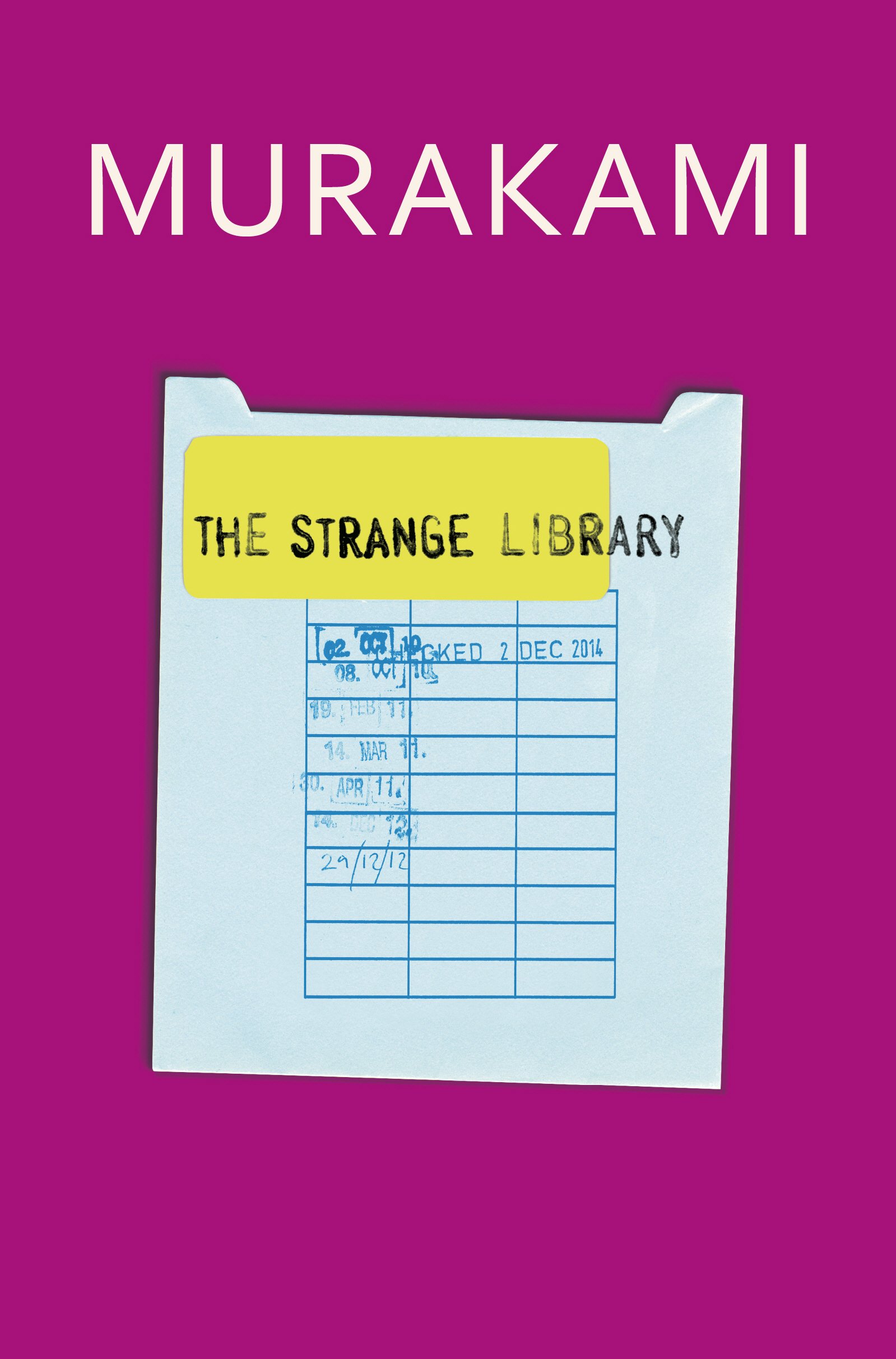
The New Weird: Haruki Murakami's "The Strange Library"

by Jon Petre

The self-dubbed "New Weird" movement has found quite substantial
favour in recent years, in authors such as China Mieville and Jeff VanderMeer. It combines literary experimentation with the old styles of H.P. Lovecraft and Mervyn Peake, with a modern genre twist that gives you something recognisable enough to understand but still strange enough to shock. Though I doubt Haruki Murakami would describe himself as a New Weird writer, his latest novellete "The Strange Library", I think, certainly belongs in that category.

A young boy, wandering home from school, wonders vaguely about how taxes were collected in the Ottoman Empire. He goes into the city library, because, as his mother's taught him, if you don't know something look it up in a library. But no sooner has he stepped over the threshold than he is spirited away to a hidden reading room below ground, where he's imprisoned with a mute girl and a man in a sheep skin by an elderly, imposing librarian.

This is just one example of the book.
It comes in a variety of colours.
I chose purple. 
I think you can see where the 'weird' comes into it.

This was a Christmas release, so if you're only just coming on to Murakami then hopefully you can probably get this cheaper than the reccomended £13.00 odd pounds, which I think for the content is pretty much extortionate. It's probably got something to do with the fact that it's only available in hardback, and the book itself...well, the book is beautiful.

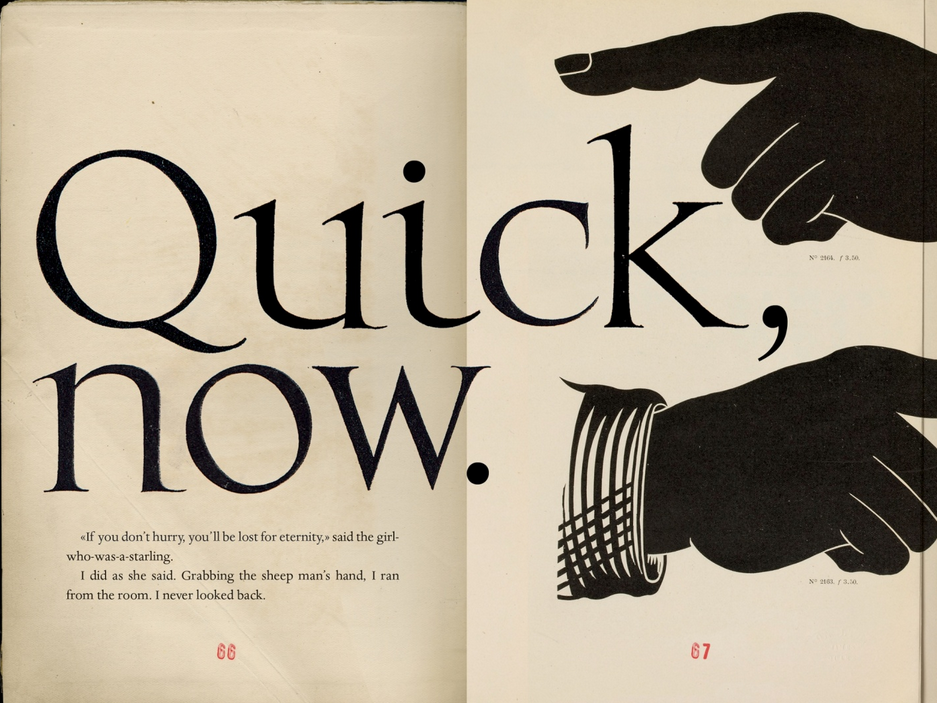
This is a toe-dipped example of "Ergodic Literature"--books which play around with layout, fonts, formats and pictures to create something more interesting than words on a page. There are pages here designed like library cards, pictures and diagrams of things mentioned in text, and words organised in patterns and shapes that give the feeling of reading almost a children's book for adults. And this is definitely for adults; not because of sex, drugs, or anything like that, but I was surprised to get such a deep and dark plotline in such a conceivably short story. The boy himself is worryingly passive, and hopelessly attached to his mother--and for good reason, as we find out later. Weird fiction, generally, revolves around taking one key theme and changing it in one 'weird' way, and then accepting that as fact- so here we have submissive and benign characters, but in, say, Mieville's "Kraken" we have a giant squid accepted quite readily as a God. So although "The Strange Library" is lacking in realism that doesn't mean that Murakami's portrayal of his characters isn't realistic. In fact, it's impressive that he manages to make us care so much for the characters in such a short space.

This layout is great, but...there aren't many words, there. 
That said, I can't help but feel slightly cheated. I mean, come on. When I bought the book I hadn't realized how short it was; honestly, at times I felt that the pictures--many of which took up a whole page--were there to pad out the short length. Most short fiction is available at a fraction of the price with often more content in terms of word count. I think Murakami's relative celebrity is what allows him to get away with this--cough, cough, George RR Martin, cough, cough--because you can bet a publisher wouldn't waste their money printing a vignette like this for a new author. All the storytelling in the world doesn't make up for what smells not so faintly of profiteering.

It's a great book, don't get me wrong. It's just that it's not a novel, it's a novellete. As long as you know what you're getting that's fine. The Strange Library is beautifully written and beautifully designed, garunteed to give you something to think about on the train in and out of work in the morning. But. The fact that the price is (relatively) so high deters me from giving this what it, in itself, deserves. It's things like this that turn people to e-books, and you can't get something as unique as this on a kindle. If you can get this cheaper online, perhaps second-hand, I really urge you to go for it. It won't take long to finish.


3/5