Thursday, 5 March 2015

DVD/Blu-Ray Reviews: "Love, Rosie" and "Wolves" - Written by Scott Gentry.

“Love, Rosie” (15)
Directed by: Christian Ditter.
Starring: Sam Claflin, Lily Collins, Tamsin Egerton and Jaime Winstone.
Rated: ‘15’ for containing strong language and sex references.
Running time: 102 minutes.
Out now on DVD/Blu-Ray, in UK stores. 

Romantic comedies. I either love them, or downright hate them, and that’s all there is to it. In the case of “Love, Rosie” however, I seem to be edging further towards the opinion of loving it, due to its engaging approach by defying genre expectations and generally being a painfully honest portrayal of love in our busy lives. It’s smart, sassy and is perhaps one of the best Rom-Com since 2011’s “Crazy Stupid Love”. 

Having been best friends since their younger years, Alex (Claflin) and Rosie (Collins) were destined to be together. But what next? School’s out and it’s time for the two to make some rather difficult decisions. After much discussion, they decide on moving to the US together to study at nearby universities, but as life so often does, problems are thrown into the mix, prompting Rosie to stay behind. But as the years pass, their lives entwine in many ways, prompting the question: is it ever too late for love? 


There were times in which I felt far too connected with “Love, Rosie”, prompting me to shout at the screen during plot twists and the saddest of scenes, but maybe that was a good thing? It shows that Ditter’s glossy adaptation of “Where Rainbows End” (by Cecelia Ahern) has succeeded in being able to make me care about its two central characters. Alex and Rosie are full of delightful British wit and charm, proving to be the most engaging of characters within the piece, especially when Claflin and Collins are on-screen together, carrying a wonderful chemistry seldom seen in many of these clichéd pieces. The film itself is beautifully shot and avoids certain clichés, eventually approaching an ending which (technically not a spoiler!) I would have liked to have remained inevitable. But this is a romance after all…

In spite of its charm, there are problems within. Perhaps the unique plot device becomes tiresome after an hour, which is mainly due to a supporting cast who aren’t all as talented as its confident leads, and yes, there are irrational decisions made by the least likely of characters, but this is an interesting contribution to the tired genre. It features a delightful soundtrack, warm humour and perhaps the makings of a cult (girly) sleepover film. Abandon your cynicism, and you may just enjoy the occasional absurdities of “Love, Rosie”. 

Film - 6.5 stars out of 10
DVD/Blu-Ray extras – 4 stars out of 10

Film/TV Rating Key
1-2 stars out of ten = Awful.
3-4 stars out of ten = Average.
5-6 stars out of ten = Good.
7-8 stars out of ten = Excellent.
9-10 stars out of ten = Amazing.


Trailer


“Wolves” (15)
Directed by: David Hayter.
Starring: Lucas Till, Stephen McHattie, Merritt Patterson and Jason Momoa.
Rated: ‘15’.
Running time: 91 minutes.
Out now on DVD/Blu-Ray, in UK stores. 

Clearly a love letter to the camp and erotic horror films of the 80’s, David Hayter’s (writer of “Watchmen and “X-Men”) directorial debut may be particularly light on action, yet is heavy on the love of the genre, becoming embroiled within an extensive plot revolving around centuries of werewolf tradition which is evidently utter nonsense, yet somewhat entertaining. 

Hayter’s coming-of-age tale begins with Cayden Richards (Till, perfectly cast), a high school jock with an elegant girlfriend and presumably, the perfect life. However, on one strange evening, Cayden awakes to find that his beloved parents have been brutally murdered. Framed for their murder, he flees, discovering in the meantime that he is blessed (or cursed) with the powers of a wolf. Whilst on the run, Cayden encounters a small town in the middle of nowhere, discovering that it is home to two small factions of werewolves. Intending to unearth his past, Cayden comes across Angelina (Patterson), the beautiful owner of the only bar in town and soon begins a friendship.  But Cayden then realises that to truly win her affections, he must face the wrath of Connor, the most feared of all wolves, who intends to marry Angelina and steal her away. 

There are elements of romance and material which is heavily clichéd and quite honestly, downright terrible. But, it’s the likeable lead actors (McHattie and Momoa are clearly enjoying themselves here) which place this piece apart from most straight-to-DVD horror flicks, especially in the scenes filled with poor CGI and monster costumes which aren’t at all convincing. Call it “Teen Wolf” with guts, but “An American Werewolf IL” this isn’t. For the horror fanatics amongst you however, you may be pleasantly surprised. 

Film - 5.5 Stars out of 10
DVD/Blu-Ray extras - N/A 


Film/TV Rating Key
1-2 stars out of ten = Awful.
3-4 stars out of ten = Average.
5-6 stars out of ten = Good.
7-8 stars out of ten = Excellent.
9-10 stars out of ten = Amazing.


Trailer

Sunday, 15 February 2015

DVD/Blu-Ray Review: Jennifer Kent creates a freshly tense and claustrophobic take on horror in "The Babadook"

"If it's in a word, or it's in a look, you can't get rid of The Babadook."

by Jon Petre

With that tagline and a fringed, post-traumatic nightmare sequence begins The Babadook. Writer and director Jennifer Kent has really outdone herself with her latest piece, which is a fresh and cognitive film that shows you can still make proper horror without the jump scares. Seriously, I don't remember a single one.

Oh look, it's like a newspaper. Perhaps we can burn
it for more nightmare fuel.
Amelia is a widow before her time, her husband Oscar having died in a car accident on the way to the hospital to give birth to her son, Sam, played by a surprisingly talented Noah Wiseman. Sam is something of a problem child, spending his time creating dangerous traps and talking about the monsters. Something I found very close to home (because it was realistic, and genuine) was the sense of weariness that Essie Davies and Kent conveyed in Amelia; she is exhausted, physically and mentally. This adds to the tension in shifting our sympathies to her and against Sam, who is presented as something of a brat for the first half of the film, serving only to make things worse for our embittered single mother. Amelia hasn't slept in weeks. Every night she has to comfort Sam and read him a story; one night, he chooses a book that his mother doesn't recognize, "Mister Babadook". After a few pages, it's clear that there's nothing normal about this story, and all the clues suggest that it's not going to end well for mother and son. But with all the stress and all the misfortune, we're not sure whether there really is a Babadook, or if Amelia's been, ah, working too hard.

I didn't get a chance to see this when it came out, which disappointed but didn't really bother me. It should have. This was great, in that it was unconventional enough to stand out and surprise me in a good way but familiar enough that I wasn't lost and that we were still standing on solid ground with what to expect, guessing what was going to happen, and so on. It was disturbing, and it broke the rules of British TV, so be warned. But then it was Australian. In a previous interview Kent had stated that she'd wanted to go for a handmade, homebrew feel to the props and the effects, and this really came out well--in the book, Mister Babadook, and in the creature itself. There're obvious Eastern European connotations (for those of you interested, the inspiration for the monster came from the Polish myth of the Kikimora) and that compliments this, although don't call me xenophobic. Furthermore the film was acted well enough, at least where it counted, in Amelia and Sam. Those dead, blank stares that Davies delivers really say volumes about the isolation and the confusion that the Babadook causes, and in their way this unsettled me more than many of the less subtle devices should have. I suppose there's the difference between a slasher movie and a psychological piece: the slasher makes you scared of what lurks behind the shower curtain while psychological horror makes you question what your existence is about, and if that's the monster. Or something.
 
Is this where all the jump scares went, mommy?
But the real success came in Jennifer Kent herself, in the writing and in the filming. The dialogue and the photography served to create a tense, claustrophobic atmosphere that put me on edge in the same way that more tawdry horror films do but without taking the easy road of the jump scares, which are frankly embarrassing when they are so often overused. Like a good haunted house maze, the minute details all add up to create a thrilling environment. I felt however that several of the plot points, such as Daniel Henshall's Robbie and the dead Dad were slightly underused, or even forgotten; not to mention one or two plot holes (who reads a book with a Babadook on the cover to a disturbed child with access to knives?) and a lukewarm ending, but I can forgive it for what all the things it got right, which were done brilliantly. I guess it is fiction, after all. The Babadook is available on DVD now.

4.5/5
 
Special Features Included On Disc:

Featurettes:
  • Special Effects: The Stabbing Scene
  • There’s No Place Like Home: Creating The House
  • Illustrating Evil: Creating The Book
  • The Stunts
Trailers:
  • Alternate trailer
  • Original trailer
  • UK trailer 


Friday, 6 February 2015

John Lithgow and Alfred Molina's chemistry is remarkably sincere, in Ira Sach's latest feature, "Love Is Strange". Written by Scott Gentry.

“Love Is Strange” (15)
Directed by: Ira Sachs.
Starring: John Lithgow, Alfred Molina, Marisa Tomei, Darren E. Burrows and Charlie Tahan. 
Rated: ‘15’ for containing strong language.
Running time: 94 minutes.
Released in UK cinemas from the 6th of February (West End) and the 13th of February (Nationwide), 2015.

Once again, acclaimed filmmaker Ira Sachs has returned to cinema with yet another drama, focussing heavily upon the subject of gay relationships. His previous feature (“Keep the Lights On”) followed the lives of two young and prosperous gay men, whereas his latest piece revolves around two much older men, a same-sex couple named Ben (John Lithgow) and George (Alfred Molina). Having lived together for almost 40 years, the pair have finally decided to tie the knot, which unfortunately results in George being promptly fired from his teaching post in the music department of a Catholic school, once the archdiocese learns of his matrimonial activities. Ben is sadly retired, and due to the expensive apartment in which they live, they are forced to reach out to their friends and relatives (Marisa Tomei, Darren Burrows etc) in order to find a place to stay until the pair can get back on their feet, requiring the couple to live in separate accommodation, placing them further away from each other than they’ve ever been before. Soon patience, and the limits of Ben and George’s love is put to the test, prompting the question, can love truly endure? 


“Love Is Strange” is most definitely not a romantic comedy. In fact, this is perhaps one of the most delicate and intimate love stories seen in some time, which can not only be related to gay relationships, but also love of any kind. Sachs is perhaps treading over already-covered ground, but in another sense he isn’t. This is perhaps a spiritual (lighter in tone) sequel to “Keep The Lights On”, showing the development of love in old age, and also the effects which life has on us, in a realistic manner, which is undeniably relatable. The piece itself has unfortunately been marketed wrongly as a comedy, whereas Sachs himself has written and directed a clearly astute film with very little aspects of comedy, clearly designed to make you think about what love means to you, whilst absorbing the events on-screen.


The film is also filled with wonderfully affecting and intimate moments shared between its distinctly rich and engaging characters, which help to make up the better sections of the film, when Sachs finally decides to stop imitating Terrence Malick in scenes made up of (inaudible) shots of New York City, and embraces his own style. This is particularly evident in a short but delicate scene, in which Ben and George visit a bar, and their love reignites upon the screen in a deliberately heart-warming, yet deserved manner.  After a short while, the charm begins to fade, and the audience are shown a true depiction of love not bogged down in Hollywood stereotypes, but the film itself isn’t so much of a showy, awards-snatching piece, instead it is a calm and thoughtful film, which doesn’t require your full attention, it just requires an audience who are able to sit back and appreciate its greatest strength, a talented cast, bolstered by two intriguing lead actors: the uncompromising pair of Molina and Lithgow. 


Both are acting heavyweights, having starred in films with demanding roles throughout their expansive filmography, but its here in which they both excel, particularly Molina, arguably stealing the piece from under the cast’s feet, much like his performances in “Boogie Nights” and “Magnolia”. Lithgow himself has never been better, and exacts true emotion upon the audience through his deceptively frail performance, as a talented painter, who is hilarious in his scenes shared with the ever-brilliant Marisa Tomei, portraying the character Kate, a novelist and wife of Elliot (Darren Burrows, excellent), whom Ben lives with, who finds it hard to concentrate due to Ben’s incessant, yet endearing chatter. 


Verdict

Charming, if perhaps showy in its style, yet Sach’s latest feature is a film with heart, first-rate performances and a valuable lesson to couples (gay or straight), in regards to triumphing over adversity.

6 Stars out of 10
Written by Scott Gentry.

Film/TV Rating Key
1-2 stars out of ten = Awful.
3-4 stars out of ten = Average.
5-6 stars out of ten = Good.
7-8 stars out of ten = Excellent.
9-10 stars out of ten = Amazing.
 
Trailer


Clip


Sunday, 1 February 2015

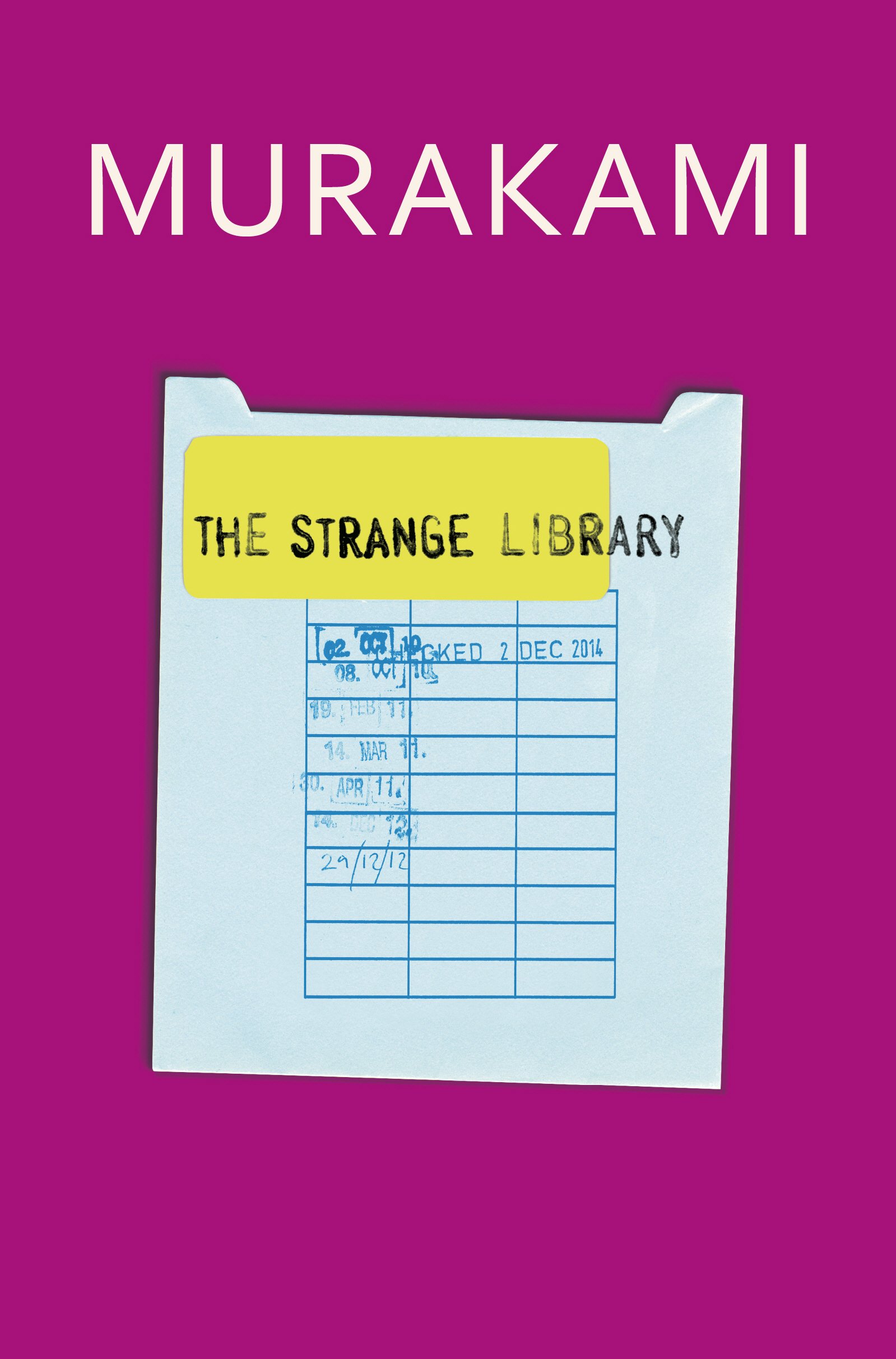
The New Weird: Haruki Murakami's "The Strange Library"

by Jon Petre

The self-dubbed "New Weird" movement has found quite substantial
favour in recent years, in authors such as China Mieville and Jeff VanderMeer. It combines literary experimentation with the old styles of H.P. Lovecraft and Mervyn Peake, with a modern genre twist that gives you something recognisable enough to understand but still strange enough to shock. Though I doubt Haruki Murakami would describe himself as a New Weird writer, his latest novellete "The Strange Library", I think, certainly belongs in that category.

A young boy, wandering home from school, wonders vaguely about how taxes were collected in the Ottoman Empire. He goes into the city library, because, as his mother's taught him, if you don't know something look it up in a library. But no sooner has he stepped over the threshold than he is spirited away to a hidden reading room below ground, where he's imprisoned with a mute girl and a man in a sheep skin by an elderly, imposing librarian.

This is just one example of the book.
It comes in a variety of colours.
I chose purple. 
I think you can see where the 'weird' comes into it.

This was a Christmas release, so if you're only just coming on to Murakami then hopefully you can probably get this cheaper than the reccomended £13.00 odd pounds, which I think for the content is pretty much extortionate. It's probably got something to do with the fact that it's only available in hardback, and the book itself...well, the book is beautiful.

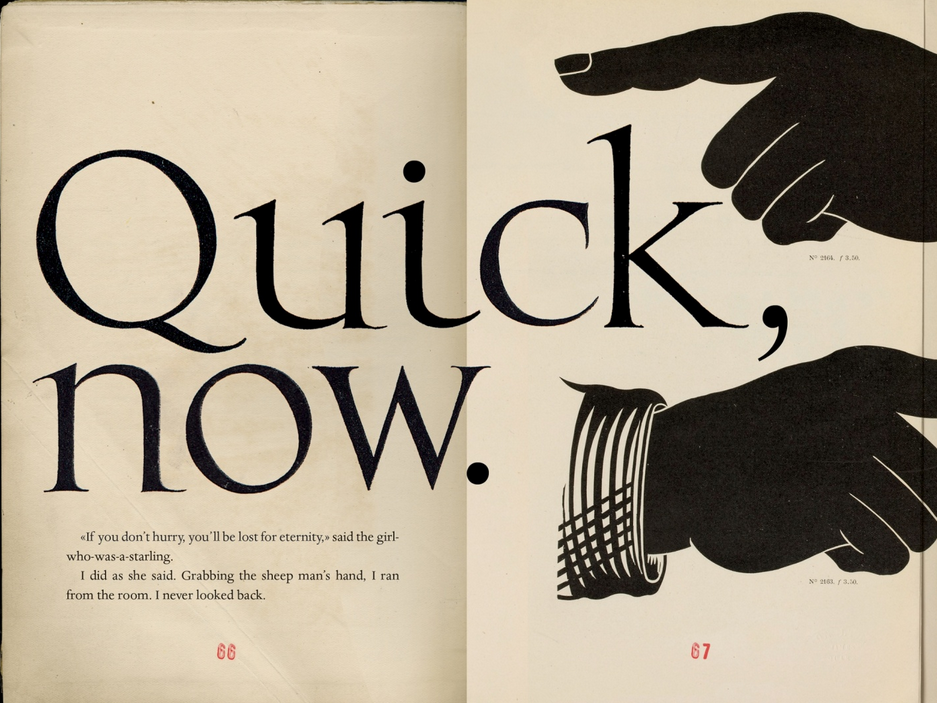
This is a toe-dipped example of "Ergodic Literature"--books which play around with layout, fonts, formats and pictures to create something more interesting than words on a page. There are pages here designed like library cards, pictures and diagrams of things mentioned in text, and words organised in patterns and shapes that give the feeling of reading almost a children's book for adults. And this is definitely for adults; not because of sex, drugs, or anything like that, but I was surprised to get such a deep and dark plotline in such a conceivably short story. The boy himself is worryingly passive, and hopelessly attached to his mother--and for good reason, as we find out later. Weird fiction, generally, revolves around taking one key theme and changing it in one 'weird' way, and then accepting that as fact- so here we have submissive and benign characters, but in, say, Mieville's "Kraken" we have a giant squid accepted quite readily as a God. So although "The Strange Library" is lacking in realism that doesn't mean that Murakami's portrayal of his characters isn't realistic. In fact, it's impressive that he manages to make us care so much for the characters in such a short space.

This layout is great, but...there aren't many words, there. 
That said, I can't help but feel slightly cheated. I mean, come on. When I bought the book I hadn't realized how short it was; honestly, at times I felt that the pictures--many of which took up a whole page--were there to pad out the short length. Most short fiction is available at a fraction of the price with often more content in terms of word count. I think Murakami's relative celebrity is what allows him to get away with this--cough, cough, George RR Martin, cough, cough--because you can bet a publisher wouldn't waste their money printing a vignette like this for a new author. All the storytelling in the world doesn't make up for what smells not so faintly of profiteering.

It's a great book, don't get me wrong. It's just that it's not a novel, it's a novellete. As long as you know what you're getting that's fine. The Strange Library is beautifully written and beautifully designed, garunteed to give you something to think about on the train in and out of work in the morning. But. The fact that the price is (relatively) so high deters me from giving this what it, in itself, deserves. It's things like this that turn people to e-books, and you can't get something as unique as this on a kindle. If you can get this cheaper online, perhaps second-hand, I really urge you to go for it. It won't take long to finish.


3/5


Friday, 30 January 2015

A school boy's dream, yet why so shy? Scott Gentry reviews Matthew Vaughn's deliriously entertaining spy spoof, "Kingsman: The Secret Service".


"Kingsman: The Secret Service" (15)
Directed by: Matthew Vaughn.
Starring: Colin Firth, Taron Egerton, Samuel L. Jackson, Michael Caine, Mark Hamill, Soufia Boutella and Mark Strong.
Rated: '15' for containing strong bloody violence, and strong language.
Running time: 129 minutes.
Released in UK cinemas from the 29th of January, 2015.

When a Matthew Vaughn film opens confidently with the classic Dire Straits hit, "Money for Nothing", and a testosterone fuelled shoot-out in a middle-eastern country, surely you're on to a winning piece of cheeky and absurd filmmaking? Well, it's partly correct. This film is the epitome of OTT, and Vaughn's latest offering may have captured the silliness of the graphic novel it is based on (written by the comic-book mastermind Mark Millar), added in his signature style (lots of blood!) and reinvented my perception of Colin Firth (no longer the well-mannered man in a tuxedo’), but is there really anything to set "Kingsman" apart from the "Kick Ass" crowd? Alas, no.

Having given up on his life ambitions, Gary 'Eggsy' Unwin (Taron Egerton) wastes his life hanging around with his friends, partying and drinking, with no clear goal in sight. At home, the family live in poverty and his mum and stepdad constantly argue, leading to upsetting scenes of domestic abuse, which Gary wishes to stop, but cannot. Upon one drink-fuelled evening however, Gary and his friends steal the car of his stepdad’s close friend, subsequently crash, and despite his friends successfully escape, Gary is arrested by the police. With no help from his immediate family, Gary remembers a promise made to him by a shadowy co-worker of his deceased father’s, calls a number, and is mysteriously released. Soon after, he is approached by Harry Hart (Colin Firth), a suave gentleman who reveals to Gary that he wishes him to be recruited into a privately funded spy organisation, named Kingsman, based upon his promising, yet unrefined skills, just as a global threat occurs from a cold-blooded genius, named Richmond Valentine (Samuel L. Jackson) emerges...


It was quite unfortunate to find that a novel (which I personally love) with such potential for onscreen blockbuster carnage has been ravaged of all its unique attributes, as Mark Millar's piece has been adapted and placed into the 'playing it safe' category of blockbuster cinema. After the negative reception to the violence found in "Kick Ass" (famed critic Roger Ebert found the film to be highly offensive and "morally reprehensible"), it seems that Vaughn and his co-writer Jane Goldman have responded with a less shocking approach to their screen adaptation, despite the horrifically violent nature of the novel, but I can understand why. 

They're worried of losing their audience. But it's been proven in many instances that '18' rated films can recover their budget and expand upon their box-office hauls over time ("Gone Girl", a prime example), despite their adult material.  But here, Vaughn's afraid to go grittier, and for a high-flying Spy film, it isn't filled with enough action to truly live up to its double-o high-jinks. Whatever would the sensors say if it was adapted straight from Millar's novel? Well, upon classification from the BBFC, "Kingsman" received an '18' rating, but has since been re-cut to a '15', in order to get the maximum amount of audience members into cinemas. It's disconcerting to know that studios are far more interested in the box office returns, rather than the creative aspects of filmmaking, and they should honestly consider taking higher risks. It's an age-old argument I know, but why not be bold?

The novel's characters reflected a sense of realism and were frequently placed into dark situations which challenged them, whereas "Kingsman" contains unbelievable action set pieces, and relatively thin characters, apart from the two leads. Ultimately, Vaughn and Goldman have attempted to cash in on their previous success, and failed, as they have essentially replicated their winning formula, but have manipulated it into a completely over-the-top piece with no real purpose. And surely if their goal was to pick at the Spy genre, it's pointless, as we've seen it all before in the form of "Get Smart", all the way to the depths of Eddie Murphy's "I Spy". But, "Kingsman" is enjoyable fun for many reasons: it's regularly offensive, frequently hilarious and features one of the most exciting shootouts of recent cinema history, set to the tune of Lynyrd Skynyrd's "Free Bird".


The piece is mindless fun, sure to enrapture testosterone-filled teenagers as well as perhaps some action-hungry adults, and it’s all down to the script (co—written by Vaughn and Goldman). It’s pleasantly self-aware, citing cheeky references to the spy genre at any given chance, from Jack Bauer all the way to Jason Bourne, containing slices of dialogue which are frequently hilarious, creating many enjoyable scenes clearly influenced by their idols. But there are problems. The representation of women in the piece stands out considerably in my mind, as the pair have bothered to create two strong-willed female characters, but at the next moment, other women are underdeveloped and used for sexual innuendos. It isn’t so much offensive, just disappointing. 

Perhaps the most enjoyable feature of Vaughn's adaptation is his all-star cast. Jackson is perfect as the stereotypical villain, a tech whiz with a hatred for blood (plus an ingenious lisp) as it makes him feel rather queasy, leading to some rather hilarious scenes shared with his bodyguard, Gazelle (Sofia Boutella), a talented paraplegic with no remorse for acts of brutal violence, frequently and inventively beheading and maiming her opponents. Firth provides a charming performance ingeniously taking pot-shots at the polite Englishman (often to the confusion of his adversaries), and has never been so funny, gleefully shooting his way through mass amounts of villains, whilst also remembering his manners (they make a man). 

Firth is particularly entertaining alongside his young co-star Egerton, especially in the earlier scenes in which Firth's seasoned Spy attempts to teach his protégé the ways of becoming a gentleman, with priceless results. Egerton himself acts solidly in a promising debut with style, bound to surprise once again in Brian Helgeland's upcoming biopic of the Kray twins, starring Tom Hardy. Alongside the talented leads there are many entertaining performances from the supporting cast, most notably from Mark Hamill, Michael Caine and Mark Strong, all of whom delight in their roles, especially Hamill, who after a long hiatus from live-action films returns in a small, yet pivotal role, as an eccentric university professor.


Once again there is clean, sleek and stylish direction from Vaughn (who has recently become a capable director of action sequences). Although, the action sequences are generally fast-paced, and Vaughn has created many of the frenetic sequences in a manner which is too fast to even begin to register the unfolding chaos playing out on the screen. It’s obviously an artistic choice which somehow fits in with the story, but these sequences often become exhausting. The CGI is also another hitch, as the film strives to include ridiculously over-the-top scenes of action which aren’t possible to shoot without the use of CGI, removing the sense of realism from the film, and damaging the film’s USP, that it’s a realistic film. 

Verdict

Essentially preposterous and overly childish, yet “Kingsman” is a gleefully entertaining romp, perfect for a Friday night at the cinema, requiring very little thought. But will we remember it in just over a year? Most probably not. 

6 Stars out of 10
Written by Scott Gentry. 

Film/TV Rating Key
1-2 stars out of ten = Awful.
3-4 stars out of ten = Average.
5-6 stars out of ten = Good.
7-8 stars out of ten = Excellent.
9-10 stars out of ten = Amazing.

Trailer


Clip

Wednesday, 28 January 2015

Clearly influenced by the best of action cinema, yet Julius Avery’s feature debut, “Son Of A Gun”, fails to hit its ambitious notes, despite a capable cast and stylish camerawork.

"Son Of A Gun" (15)
Directed by: Julius Avery.
Starring: Brenton Thwaites, Alicia Vikander, Ewan McGregor, and Nash Edgerton.
Rated: '15' for containing very strong language, strong bloody violence, sex and drug use.
Running time: 108m 49s.
Released in UK cinemas from the 30th of January, 2015. 

It's honestly quite a treat to see Ewan McGregor in a film which A) allows him to use his Scottish accent, and B) doesn't require him to wield a lightsaber, or attempt to outrun a tsunami. In fact, it's just nice to see him on screen, as it seems as though he’s been absent from cinema lately. But in Julius Avery's latest Australian thriller, regarding heists, damaged women and long prison sentences, it's clear that not even the presence of perhaps Scotland's most beloved actor is enough to guide audiences through its weak dialogue, unambitious plot and blood-drenched action sequences.

19-year-old JR (Brenton Thwaites) has just been placed into a maximum-security prison and is set to serve sixth months amongst the most dangerous of Australia's inmates. Upon his introduction into prison life, JR is mortified to find violence and rape at nearly every turn. But, amidst the chaos, JR soon finds a friend in Brendan (Ewan McGregor), a powerful inmate with plenty of friends on the inside, as well as the outside. After taking a shine to JR and helping him in some rather challenging situations, Brendan asks that he return the favour when his sentence ends. Despite his inexperience in armed crime, JR decides that aiding and abetting this deceptive and damaged criminal can only be the right decision. But, in the wake of various criminal operations, JR can't help but wonder whether it was the right decision after all, especially when the love of his life, Tasha (Alicia Vikander), arrives into the equation...


The main draw of "Son Of A Gun" is the film's cast, but apart from its star power, is it really any different to the low-budget films we so begrudgingly flick through, in the straight-to DVD section of HMV? No, it isn't. However, the film is at its most intriguing when following the story of our main character (especially within the first half-an-hour), as JR is an often silent soul who's back-story isn't revealed, adding intrigue to the proceedings, as we follow him into the shadowy underworld of organised crime. But when the film isn't focussing on JR, it becomes bogged down in clichéd material seen time and time again. Writer/director Julius Avery’s feature debut attempts to focus upon the key topics of a typical crime drama, such as the loss of innocence, but only glances at them, brushing aside the possibilities of an intriguing romance and truly great character development.

Despite his clichéd script, Avery's skill behind the camera is perhaps the most intriguing feature of the piece, particularly in certain action/chase sequences which ooze of influences from Michael Mann, and perhaps fellow Aussie David Michôd, which are most certainly welcome. The main cast are talented; McGregor himself revels in the role of a filthy criminal, who's also infrequently funny, with the humour of the piece clearly having been written for him. But here lies another problem, what is the specified tone? It begins as a ghastly thriller, (possibly a character-study of our main protagonist) but morphs into a hit-and-miss film, with scenes that just cannot be taken seriously, especially one’s shared with the villain of the piece, played by Jacek Koman.


Ultimately, McGregor has the most amount of fun, especially when he spends time deciding how to interrogate a timid young man: hammer, or freezer? Thwaites himself proves to be a talent worth following, and after recent roles in "Maleficent" to "Oculus", the young star continues to shine amongst his fellow cast members, producing a reserved performance, which eventually pays off. Vikander, a victim of circumstance here, is unfortunately left high and dry like most women in this testosterone-fuelled piece. Her character is undeniably weak, but she shines, emerging as one of the most interesting within the piece, much like her role in Alex Garland's "Ex Machina". 

Verdict

Occasionally grim and frequently stylish, but this is another standard genre piece which benefits from its main star’s talents, yet falters in its attempt to discover the film's tone and the overall purpose of the piece. 

4.5 Stars out of 10
Written by Scott Gentry. 

Film/TV Rating Key
1-2 stars out of ten = Awful.
3-4 stars out of ten = Average.
5-6 stars out of ten = Good.
7-8 stars out of ten = Excellent.
9-10 stars out of ten = Amazing.

Trailer


Clip

Thursday, 22 January 2015

Smart, tense and undeniably challenging, but Alex Garland's directorial debut is foiled by underwritten roles, and a clichéd ending. Scott Gentry reviews "Ex Machina".

"Ex Machina" (15)
Directed by: Alex Garland.
Starring: Domhnall Gleeson, Oscar Isaac and Alicia Vikander.
Rated: '15' for containing strong language, bloody violence and sex references.
Running time: 108 minutes.
Released in UK cinemas from the 21st of January, 2015.

Alex Garland is undoubtedly one of Britain's most famed screenwriters. Having begun his winning streak with scripting duties on Danny Boyle's revolutionary horror "28 Days Later", back in 2001, Garland shot to fame with his distinctive brand of sci-fi/horror, and continued with stunning pieces such as "Sunshine" (2007). But here, the go-to-guy for unconventional approaches to sci-fi cinema, seems to have lost his touch, in an overlong and ultimately laborious addition to the artificial intelligence back-catalogue.

A young and talented technology geek, Caleb Smith (Domnhall Gleeson), works in the world's most powerful search engine company named BlueBook, successfully run by the multi-billionaire, Nathan Bateman (Oscar Issac). Upon winning first prize in a company competition, Caleb is invited to visit the house of his enigmatic and mysterious employer, revelling at the prize, which money can't buy. After arriving at the mountain-based estate however, Caleb soon realises that Nathan is nothing more than an (albeit intelligent) egotistical and self-obsessed drunk, with a needless/glamorous house maid and seemingly, far too much time on his hands. After toying with Caleb over drink-fuelled discussions, Nathan eventually (in a childish, and giddy manner) reveals to Caleb that the home is in fact a secret research facility, in which the world's first artificially intelligent being has been created. Its name is Ava. Immediately, Caleb bonds with the fully-working Ava (Alicia Vikander), but when required to take part in rigorous Turing tests (the examination to prove a machine's ability to exhibit intelligent behaviour, like a human being), trouble occurs in paradise, and Caleb is left questioning notions of an ethical nature...


In the past few years we've had far too many films regarding artificial intelligence, and frankly, it's becoming rather annoying. But, it's not to say that the idea of AI's aren't a tempting prospect. It's an idea which could ultimately change the course of history. Here however, it's not even helping to change cinema history. Unfortunately, Garland has set himself up to fail by entering into an already crowded house full of the same ideas, with no clear ambition or idea which would rival productions such as Spike Jonze's challenging romance, "Her". Here, we have a clearly intelligent piece of filmmaking, which has unfortunately arrived far too late.

The piece, however tedious, does include some perfectly acceptable performances. Gleeson and Issac are both on top form, with entertaining roles which may not challenge their style, but satisfy nonetheless, especially when the pair discuss "Ghostbusters" and dance to a positively groovy tune with the housemaid. But here lies the problem, for a film with such challenging ideals and dark subject matter, Garland constantly wrecks the atmosphere by adding comic effect into scenes which don't require it. Especially (SPOILERS, of sorts?) when a certain character reaches a ghastly demise, and in a perfectly laughable manner, dies relaying lines which are honestly hilarious, but shouldn't belong in a scene which purposefully attempts to evoke dark emotions. Although being the main subject of the film, Vikander (who portrays Ava) isn't given a lot to work with, and is required to state lines which occasionally engage interest, but her story arc fails to provide her with a decent role which would hold any concentrated form of vague interest. 

Without the great idea of AI's, we're left with a drama which features a love triangle of sorts, that doesn't exactly feel romantic, but rather sickening. By the time the third act comes into play, the film is found running on fumes, eventually concluding in a manner which is not only fairly obvious, but unimaginative. It seems that Garland himself has decided to play the project safe, and perhaps due to a constrictive budget, was forced to do so, and fails to explore the world outside of the lab. 


Apart from its practically thin plot (it is a January offering from Hollywood, don't forget), and virtually undemanding narrative, "Ex Machina" does benefit from some minor details. Rob Hardy's cinematography is faultless, and adds a wonderfully glossy look to the film, highlighting the features of Nathan's home beautifully, despite a relatively low budget. The film's score is also of merit, as Portishead’s Geoff Barrow and composer Ben Salisbury (composers of the unused soundtrack to 2012's "Dredd" -http://drokk.bandcamp.com/have written a delightful soundtrack filled with some sinister tracks for the finale, which linger in the mind for some time after. 

Verdict

A piece which shows promise, but Alex Garland's directorial debut is foiled by constant comparisons to other genre pieces which are often larger in scope, and ideas which aren't ever fully developed. The film is held together by its more than capable cast, but ultimately there's nothing to entertain past the idea of artificial intelligence.


6 Stars out of 10
Written by Scott Gentry.

Film/TV Rating Key
1-2 stars out of ten = Awful.
3-4 stars out of ten = Average.
5-6 stars out of ten = Good.
7-8 stars out of ten = Excellent.
9-10 stars out of ten = Amazing.

Trailer


Clip

Thursday, 15 January 2015

Damien Chazelle presents his latest directorial effort, a dazzlingly smart and triumphant musical protégé drama, reinforced by two incredible awards-worthy performances. Scott Gentry reviews "Whiplash".


"Whiplash" (15)
Directed by: Damien Chazelle.
Starring: Miles Teller, J.K. Simmons, Paul Reiser, Mellissa Benoist and Austin Stowell.
Rated: '15' for containing very strong language and strong sex references.
Running time: 106 minutes.
Released in UK cinemas from the 16th of January, 2015.

Three months ago, I was fortunate enough to catch "Whiplash" at the London Film Festival, and since then it has been released in America to critical acclaim, received a Golden Globe for best supporting actor (going to J.K. Simmons) and many other nominations. But despite the time which has elapsed since my inspiring and intoxicating viewing, I've only become far more eager to see this visually arresting piece again. "Whiplash" (believe it or not) is what cinema's all about. It's a film with heart, and as James King (a fellow Film critic) so rightly said, the film is "so good, it'll change the way you look at life".  


Miles teller (a long way from the depths of "Divergent") is Andrew Neyman, our cocksure, jazz drumming antagonist, who through his accomplished way with a pair of sticks, drums like a young Buddy Rich. Whilst determined in his pursuit of stardom to become "one of the greats", he is surprisingly accepted into the Shaffer Conservatory, a prestigious music school, highly regarded as the best in the United States. Shortly after joining the infectiously competitive school, Andrew is introduced into the class of the school's most feared and respected tutor (who's methods may gain success, but are ultimately questionable), Terence Fletcher (J.K. Simmons), the one person who stands in his way of achieving virtuosity. But as Andrew endeavours to succeed, his social life and sanity begins to crumble, with the relationships between his family and friend Nicole (Melissa Benoist), suffering under his inextinguishable thirst for success. So, Andrew is posed with a question: love, or greatness? 


There have been many outstanding renditions of (mentally and physically) tortured musicians in modern cinema (“Crazy Heart” and “Walk the Line” are excellent examples), but “Whiplash” achieves a sense of compassion for cinematic characters like never before. Here we are placed in the shoes of a sanguine, yet ultimately impolite character, who, by all rights, shouldn’t be rooted for by the audience, and still, we feel compelled to care for Andrew. But, who really should we attach ourselves to in “Whiplash”? Our two main characters are both as socially incompetent as each other; not fit for society. But through their wonderfully crafted personalities, we are drawn to discovering their ambitions whatever the events on-screen. Originally based upon his own short film, but rewritten here, its Chazelle’s creation of these two perplexing characters, and their subsequent rivalry, which conclusively anchors this attention-grabbing piece. The story itself may seem simplistic, but Chazelle has crafted tense and bitter entertainment effortlessly, providing edge-of-your-seat thrills without the need for gratuitous violence. It’s the shocking revelations of the plot, which really took my breath away.

Previously, Teller wouldn’t have been my idea of a lead actor, but after this scintillatingly intense performance, my opinion was instantly denounced. Teller is evidently talented, and throughout this roller-coaster ride of emotions, he commands the screen from start to finish with a sincerely impassioned performance, which works particularly well in regards to the psychological aspects of the character, even when Andrew’s pretentious persona wears thin under pressure. Simmons himself returns in full J. Jonah Jameson mode to present a fearsomely daring performance, filled with delightfully dark comedy ("Oh my dear God. Are you one of those single tear people?") which he excels in, as a sort of updated answer to Stanley Kubrick's horrific creation, Sergeant Hartman, as he bellows heinous taunts towards his unwitting students and employs draconian tactics into rehearsals, intent on creating an orchestra of military precision. It's a gruelling experience, and Simmons revels in the role, deceiving students with courteous words in one moment, and destroying their very dream the next. It's honestly both captivating and petrifying.

A new-comer to cinema, yet instantly memorable, Mellissa Benoist also provides exceptional support as Andrew's will they/won't they interest, especially in the heart-warming scenes in which he visits the local multiplex, and attempts to woo her affections. Chazelle's dialogue delightfully sizzles between the pair, creating one of the most authentic on-screen romances in years. 

Verdict

The film is faultless, and along with Sharone Meir's glossy cinematography, Justin Hurwitz's exhilarating score and inspired editing by Tom Cross, Chazelle's love-letter to cinema and Jazz is a supremely well-acted and enthralling drama, which has successfully reinvented the protégé musician sub-genre. Cinematic perfection. 

10 stars out of 10
Written by Scott Gentry.

Film/TV Rating Key
1-2 stars out of ten = Awful.
3-4 stars out of ten = Average.
5-6 stars out of ten = Good.
7-8 stars out of ten = Excellent.
9-10 stars out of ten = Amazing.

Trailer


Clip